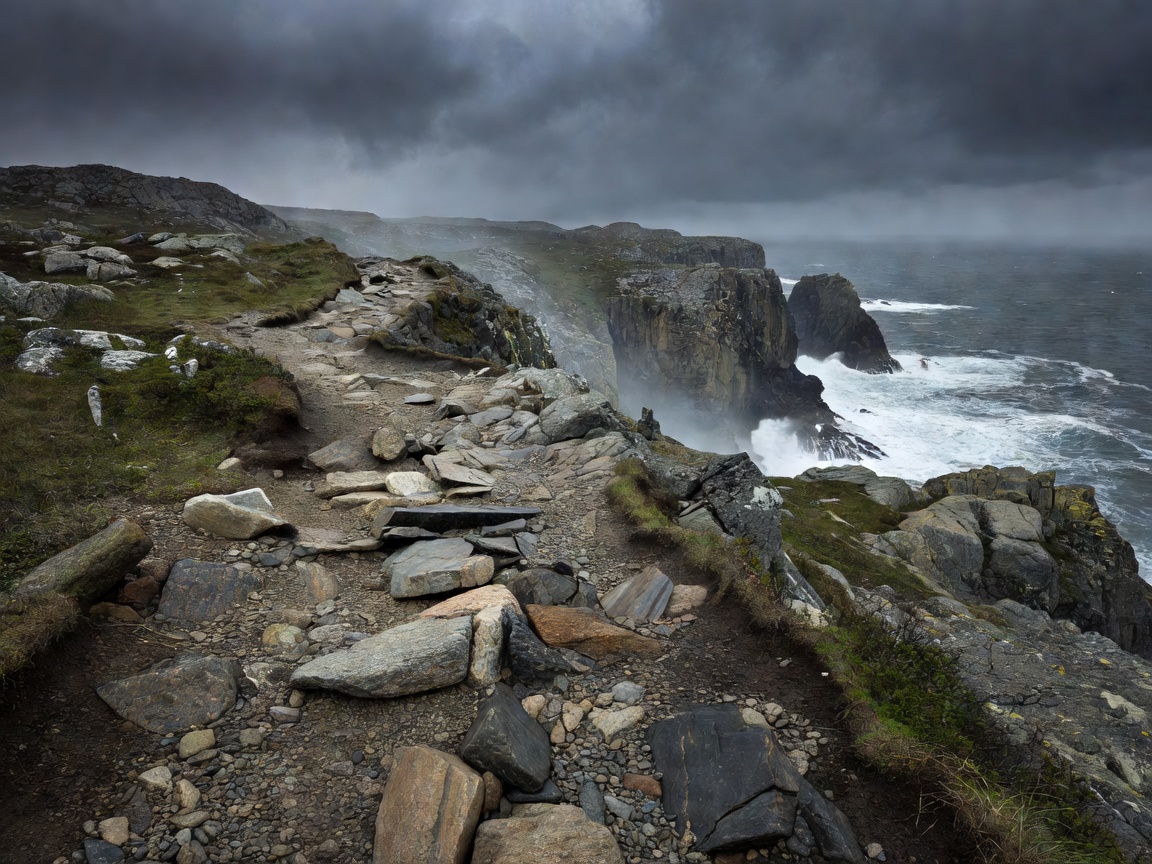
Nordic trail running is not one terrain type. A route may follow soft forest tracks, root-heavy paths, exposed rock, boggy ground, steep mountain sections or a coastal mix. Conditions vary significantly between destinations and can change within a short journey. Use local route descriptions and current information when available.
Read the terrain before choosing distance
Forest trails can be sheltered, but roots, mud and wet leaves affect footing. Broad tracks may support steady running; narrower paths can require slower movement and frequent attention. Mountain routes may include sustained climbing, rough rock and exposed sections. A short distance on technical ground can take longer than a longer route on smooth paths.
Coastal routes differ as well. Some are firm and open; others cross rock shelves, sand, grass or narrow footpaths. Check access conditions and route markings. Do not assume a scenic shoreline is continuous or suitable for running throughout.
Elevation and technical surfaces
Look beyond total distance. Review ascent and descent where reliable route information is available, along with the shape of the profile. Repeated short climbs create a different effort from one sustained ascent. Descents on loose stones or wet rock may require careful footing and controlled pace.
Roots, stones, mud and uneven ground can make pace comparisons with road running unhelpful. Plan by time, terrain and effort rather than expecting a fixed speed. If a route is unfamiliar, leave margin for pauses, navigation and changes in surface.
Weather, wet ground and daylight
Weather can shift by season, elevation and exposure. Rain can turn soil into mud and rock into a slippery surface. Wind matters on open coast or high ground. Low cloud or mist can reduce visibility and make route-finding harder. Check current local forecasts and warnings before setting out; revise the plan when conditions exceed your equipment or experience.
Daylight varies with latitude and date. The available running window may be short in some seasons and unusually long in others. Confirm sunrise and sunset for the destination and build a route that finishes with margin. Carry a dependable light when conditions or timing require one. A planned turnaround point is useful if weather or progress changes.
Navigation and route planning
Use route information from a reliable, current source and understand the route before departure. Check junctions, access restrictions, surface notes and exit options. A downloaded map can be useful where coverage is limited, but a phone battery is not a complete contingency plan. Consider a paper map or other navigation method appropriate to the route.
Tell someone your intended route and expected return when heading into remote terrain. Check local guidance about access and land use. Avoid creating new paths or disturbing wildlife. If route marking is unclear, stop and reassess rather than continuing on assumption.
Footwear and layers
Choose footwear for the route surface, fit and expected conditions. A grippy outsole can help on wet or loose ground, but no shoe removes the need for careful movement. Consider cushioning, drainage and stability based on the route and your experience. Break in footwear before relying on it during travel.
Layering should allow adjustment during effort and stops. A light shell, insulating layer and dry spare can be useful depending on season and exposure. Protect extremities when conditions call for it. Carry water and food appropriate to the outing, and keep small essentials accessible. The right kit varies by destination and forecast.
Comparing route settings
Forest routes may offer shelter and frequent route choices, but can be muddy or confusing at junctions. Coastal routes can be easy to orient by landmarks, yet exposed to wind and changing shoreline access. Mountain trails offer elevation and broad views but usually require more careful weather and navigation planning. Each has advantages and constraints; none is universal shorthand for a destination.
Match the route to the group’s experience, time available and conditions. For a mixed-ability group, choose a route with clear decision points and practical exit options. Avoid choosing solely by a route’s headline distance or image.
Good for
Runners who enjoy varied surfaces and are willing to adjust pace to terrain. Trail trips also suit people who prefer route exploration to fixed splits. They may be less suitable when conditions, navigation or technical footing are beyond a runner’s current experience.
What to know
- Terrain varies substantially between regions and routes.
- Wet roots, rocks and mud can slow progress and affect footing.
- Check daylight, forecast, access and route information before departure.
- Carry navigation and a weather-appropriate clothing plan.
- Build time margin into unfamiliar or exposed routes.